
Paper packaging can be recyclable, but the word “paper” does not settle the question. Check the finished construction, the residue left after use, the local collection instructions and the recycling process that will receive it.
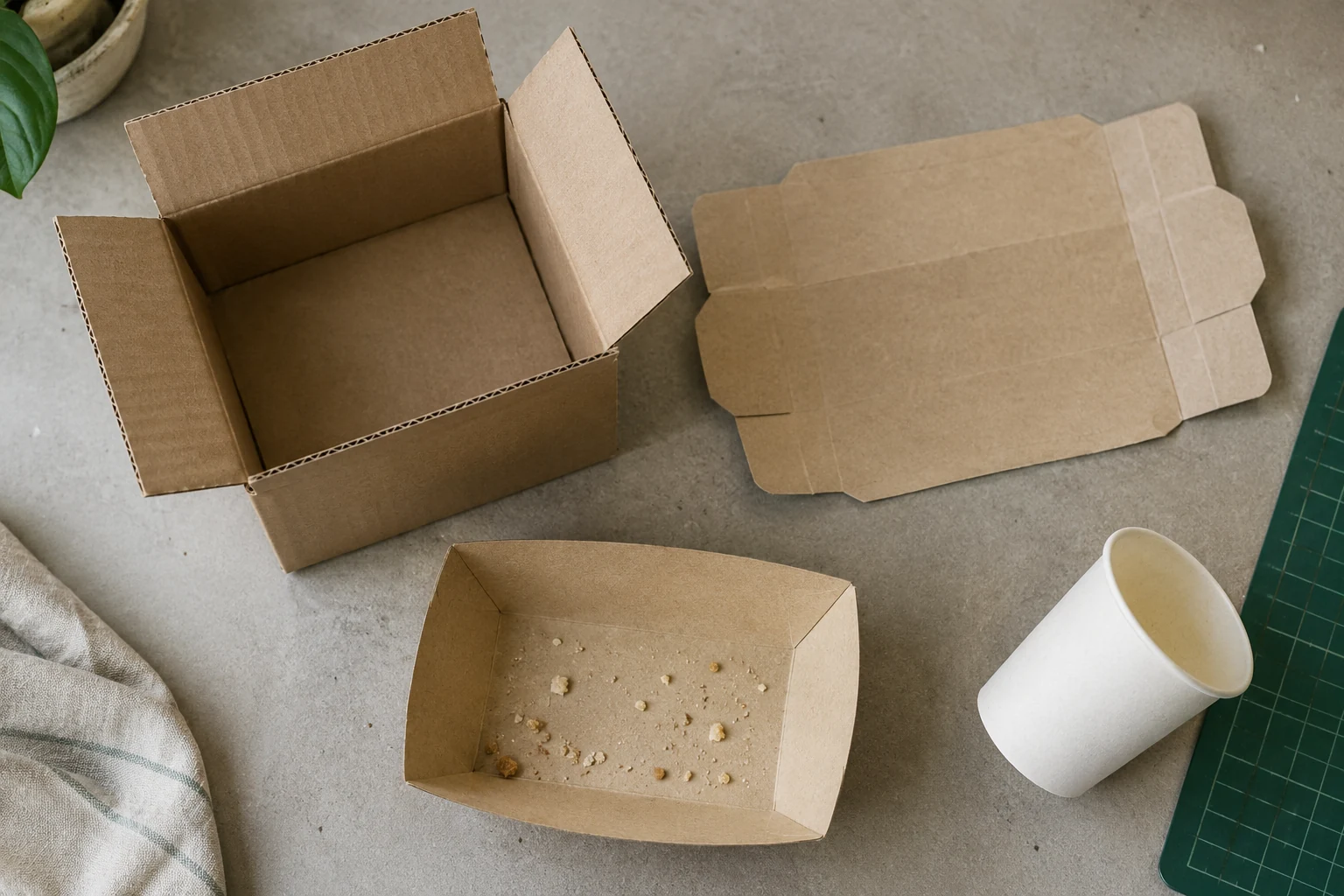
Check the package as it will be discarded
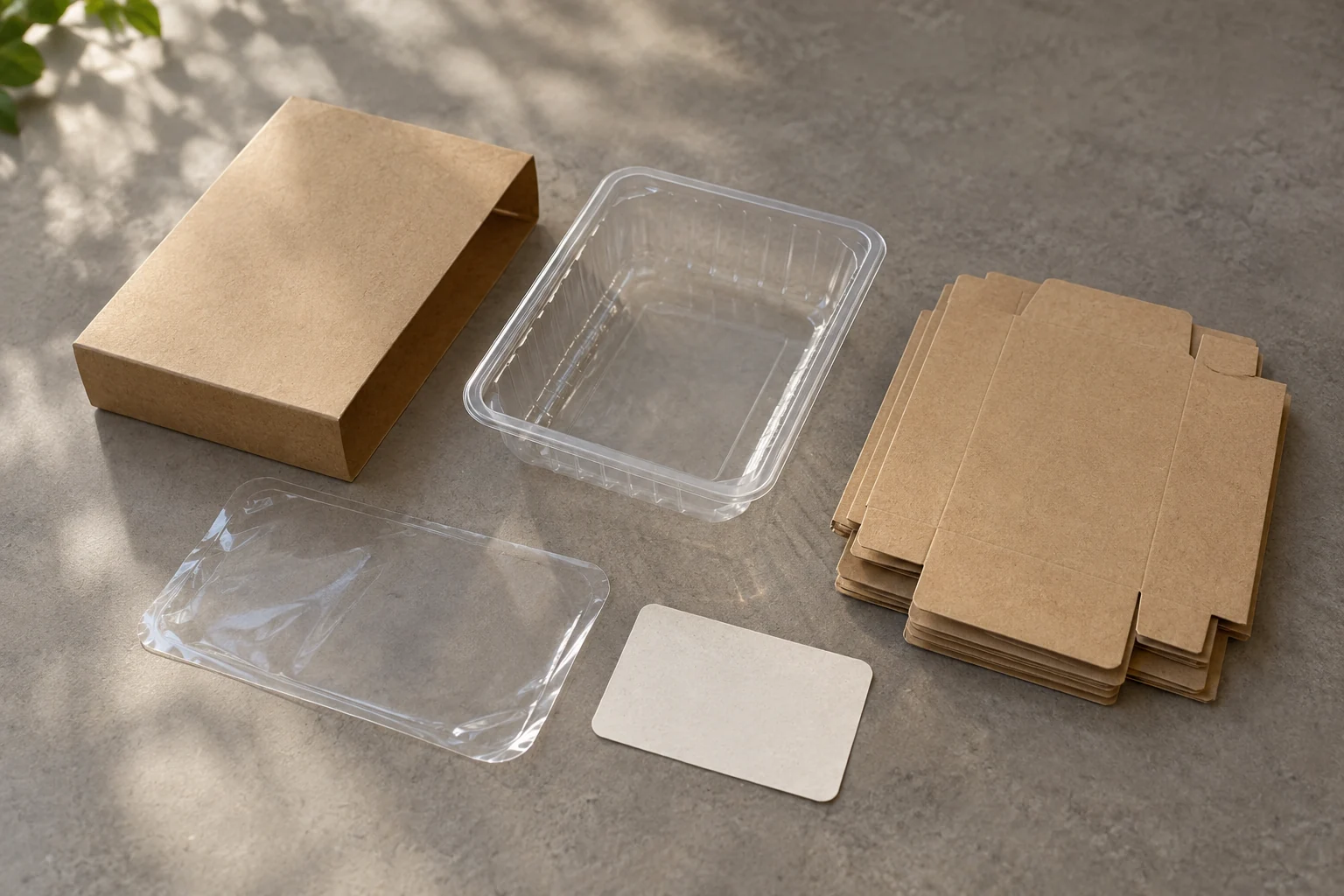
Start with the complete item, including coatings, windows, labels and closures. A clean sheet of board is a different object from a coated food tray made with that board. Ask the converter for the construction rather than inferring it from color, texture or a plastic-free claim.
Cepi’s design guidance explains that barriers and other treatments can make paper packaging more challenging to recycle. Its recommendations also defer to national systems. That distinction matters when a design travels across markets: a material assessment does not establish that a household can put the item in its local paper bin.
Use a separate record for each construction revision. A change of adhesive or barrier coating may be hard to see and still change the evidence needed for the finished pack.
| Part of the check | Evidence to collect | Decision it supports |
|---|---|---|
| Paper or board substrate | Converter’s construction specification | Identifies the base material without assuming the whole pack behaves like it |
| Coating, laminate or treatment | Material identity, application and relevant recyclability assessment | Shows what the recycling test must include |
| Window, label or closure | Attachment and separation instructions | Establishes what remains with the paper after normal use |
| Food or product residue | Expected discard condition and local instructions | Establishes whether preparation or another route is needed |
| Destination | Current collector guidance for the exact item | Establishes the practical collection route |
Handle residue using the item’s actual instructions
Remove remaining contents, then check what the local program says about that package. Avoid a universal rule that every trace of grease makes all paper unrecyclable. The US EPA’s recycling guide distinguishes pizza boxes from food-contaminated takeout containers and tells readers to check local acceptance. Those examples are US guidance, not a promise that every collection program accepts every food pack.
For packaging development, describe the likely condition after use. An assessment of a pristine sample may leave the most important disposal question unanswered. Record whether the consumer can reasonably separate components and whether the published instructions match that behavior.
Keep collection evidence separate from mill evidence
Collection answers whether an item enters the system. Technical assessment addresses how a defined construction behaves in a specified process. Both matter, and neither proves the other.
Cepi’s version 3 overview describes laboratory work that emulates pulping, screening and sheet formation in a conventional recycling mill. That scope helps you ask what a report covers. It does not prove access to collection, and a report for a conventional process does not automatically describe a specialist mill.
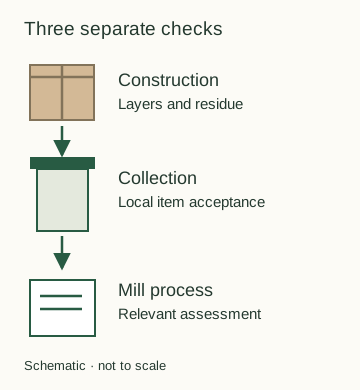
When reading a test report, match the sample identification to the package specification. Note the protocol version, the process assessed and the conclusion’s conditions. If a report covers an unprinted substrate, ask whether the finished print, coating and adhesive combination was represented. Do not extend the result by resemblance.
Write a qualified decision rather than a blanket claim
A useful internal decision names the package, destination and unresolved condition: “Construction revision B has a relevant process assessment; collection acceptance for this tray in the intended market still needs confirmation.” That statement tells the next person what to do. “It is paper, so it is recyclable” closes the investigation too early.
Before approving disposal copy, retain the dated collector instructions, the supplier construction document and the assessment that covers the finished item. If one is missing, keep the claim under review. For an economic comparison of alternative packs, use the good-pack cost worksheet; return to recycling economics for the broader decision sequence.
Methods and limits
This guide combines the cited European paper-industry guidance with US EPA disposal examples. It does not merge those systems into a global acceptance rule. The table is an original editorial evidence record; no package shown here was tested by this publication. Checked October 2026.