
A film change can move losses from the material bill into rejected packs and repeated stops. Validate the proposed film with the actual product, equipment and production conditions, while checking its recycling route separately.
Define the material and the acceptance rule first
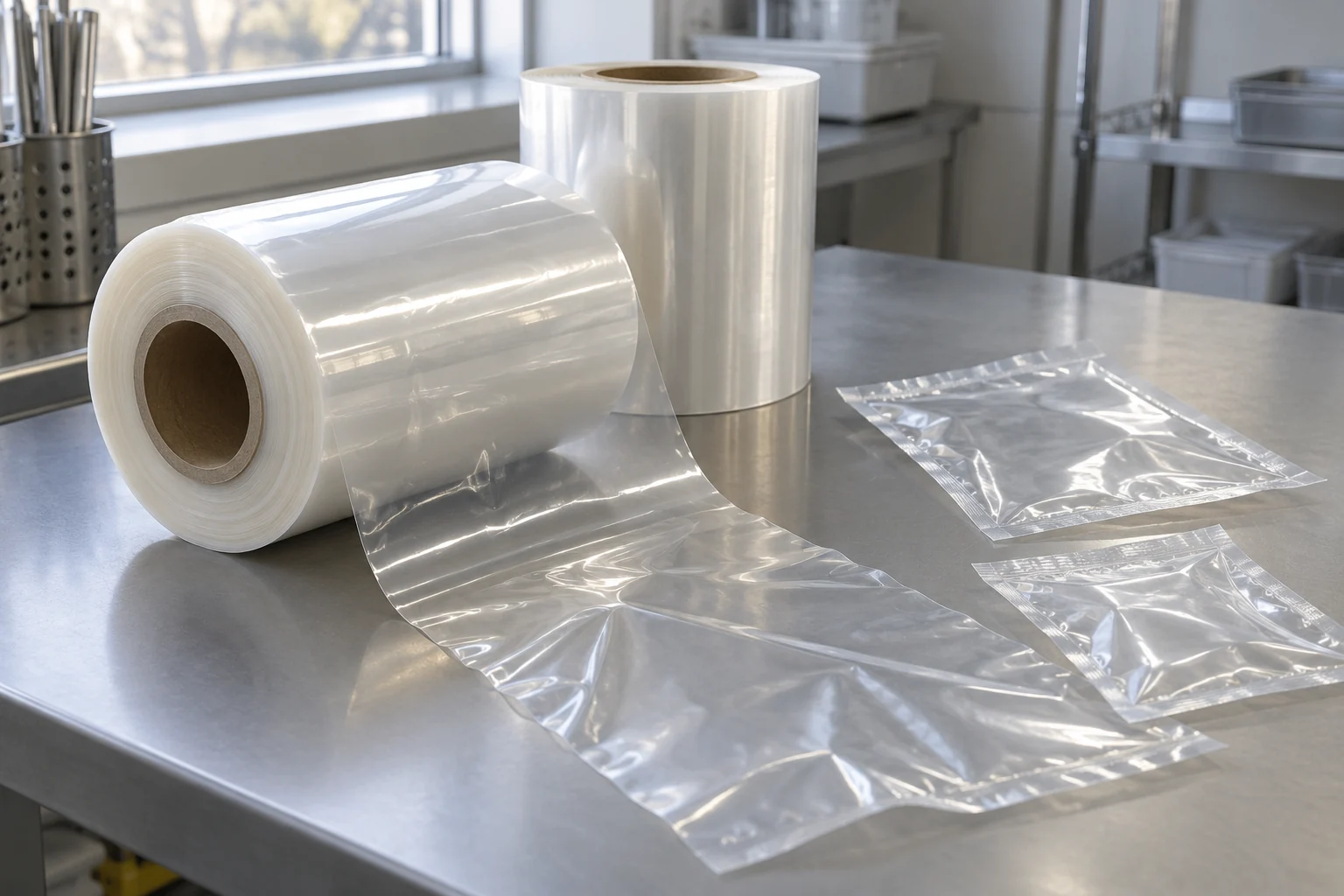
Identify the full film construction, the sealant side, the roll specification and the product-protection requirement before arranging a machine trial. A description such as “recyclable film” leaves too many variables open. It does not establish how a web tracks, what sealing conditions it needs or whether the finished pack protects the contents.
Syntegon’s flow-wrap explanation describes the challenge of adjusting time, pressure and temperature when moving away from conventional composite films. Use that as a reason to plan a trial, rather than as proof that a particular replacement will run on your machine. Its broad recycling language also needs a separate destination-market check.
Agree what an acceptable pack must do. Include seal appearance, integrity, product condition, coding and the downstream handoff. If shelf life matters, the release plan needs appropriate product-protection evidence beyond a visually neat seam.
Use a staged trial record
Change one controlled condition at a time when diagnosing a problem. First establish that the machine is in its approved operating condition, then test the material within limits agreed by the material and equipment specialists. Record the result, including failed conditions. A successful setting without its surrounding failures gives little information about robustness.
| Trial stage | Record during the check | Hold the decision if… |
|---|---|---|
| Incoming material | Supplier, construction revision, roll lot and storage condition | The trial roll cannot be matched to the proposed supply |
| Web handling | Tracking, creasing, registration and interventions | Operators must repeatedly correct the web |
| Forming and sealing | Approved settings, actual observations and sample IDs | A clean-looking pack lacks the required seal evidence |
| Start, stop and restart | Rejects and recovery sequence under approved procedures | Only continuous steady running works |
| Product and discharge | Product contact, pack damage and next-machine acceptance | The new pack fails after leaving the sealer |
| Repeatability | Further lots, formats and representative production conditions | The evidence covers only a convenient short demonstration |
Examine the seal as a separate output
A stable web does not guarantee an acceptable seal. Inspect the relevant seams and their intersections using a documented sampling plan. Record where a defect occurs and the conditions under which it appears. A repeated problem at a fold is a different investigation from random contamination across the seal.
RDM’s technical explanation distinguishes cooled seal-strength measurements from hot-tack evaluation and discusses contamination and mechanical condition as possible contributors to failures. Those are different checks; choosing one because a test instrument is available can leave another failure mode unexamined.
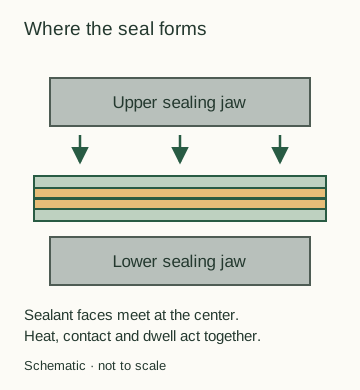
The public scope of ASTM F2029 also separates laboratory heat-sealability work from production-equipment validation. Laboratory evidence can help establish starting relationships. It cannot release a production process by itself. The full standard and the actual test procedure remain the laboratory’s responsibility.
Release a bounded specification
The release record should identify the film revision, machine configuration, product, approved operating conditions and the evidence that supports them. Assign an owner to each remaining issue. If the trial reveals a need for different tooling or controls, obtain a documented equipment assessment before counting the conversion as a material-only change.
Keep end-of-life evidence alongside this record but make it a separate decision. Machinability says that the package can be produced acceptably. Collection and recycling evidence concern what happens later. The seal-initiation guide explains why a supplier temperature result needs conditions; the parent materials and machinery guide organizes the overall change.
Methods and limits
This is an original trial-planning checklist based on the cited manufacturer and testing explanations. It gives no universal temperature, speed or pressure, and does not prescribe interventions inside operating machinery. Use the actual equipment manual, site procedures and qualified technical support. Checked October 2026.